Gift ideas with old photos: 9 gifts people keep, and how to make them in time
Gift ideas with old photos that families treasure: restored prints, a small photo book, a mailed postcard and more, with steps to scan and finish in time.
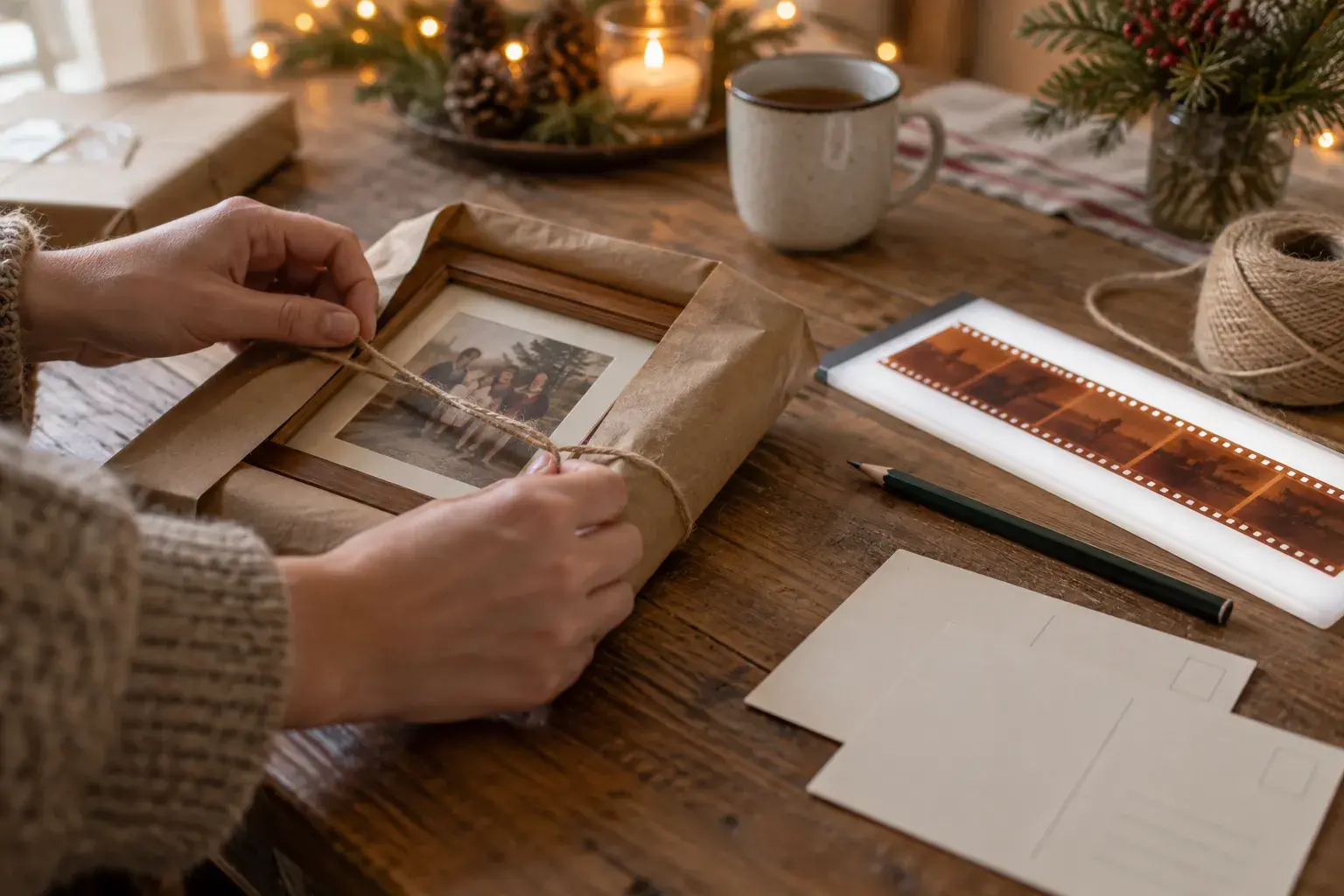
The best gift ideas with old photos all do one thing: they put a picture in someone's hands that they have not seen in years. A restored print of one favorite photo, a small book about one person's life, a real postcard from the past, or an evening slideshow of a forgotten box of film will mean more than any mug or calendar, because the photo is the gift and everything else is packaging.
Most of the work is not in the gift itself. It is in finding the right picture, getting a copy good enough to print, and doing it early enough before the holidays. This guide walks you through that in order: how to choose the photo (and why the old negative is often better than the print), how to get a file sharp enough for the size you want, nine gift ideas with clear steps, a timeline that works backward from the holidays, and the mistakes that most often spoil a photo gift.
Start with the right photo, and with the negative if you have it
Choose the photo for the person, not the other way round. A good starting question is "what would make them say I had forgotten that?" A few ideas by recipient:
| Gift for | Photos that tend to land |
|---|---|
| A parent or grandparent | Their wedding day, their first home, their own parents young, a car or a dog they loved |
| A brother, sister or cousin | Childhood holidays, the old kitchen, school photos, the whole gang on a beach |
| Grown children | Their parents at the same age they are now, the day they came home from the hospital |
| An old friend | The two of you decades ago, a trip, a band, a shared apartment |
| A couple | Photos of each of them before they met, side by side |
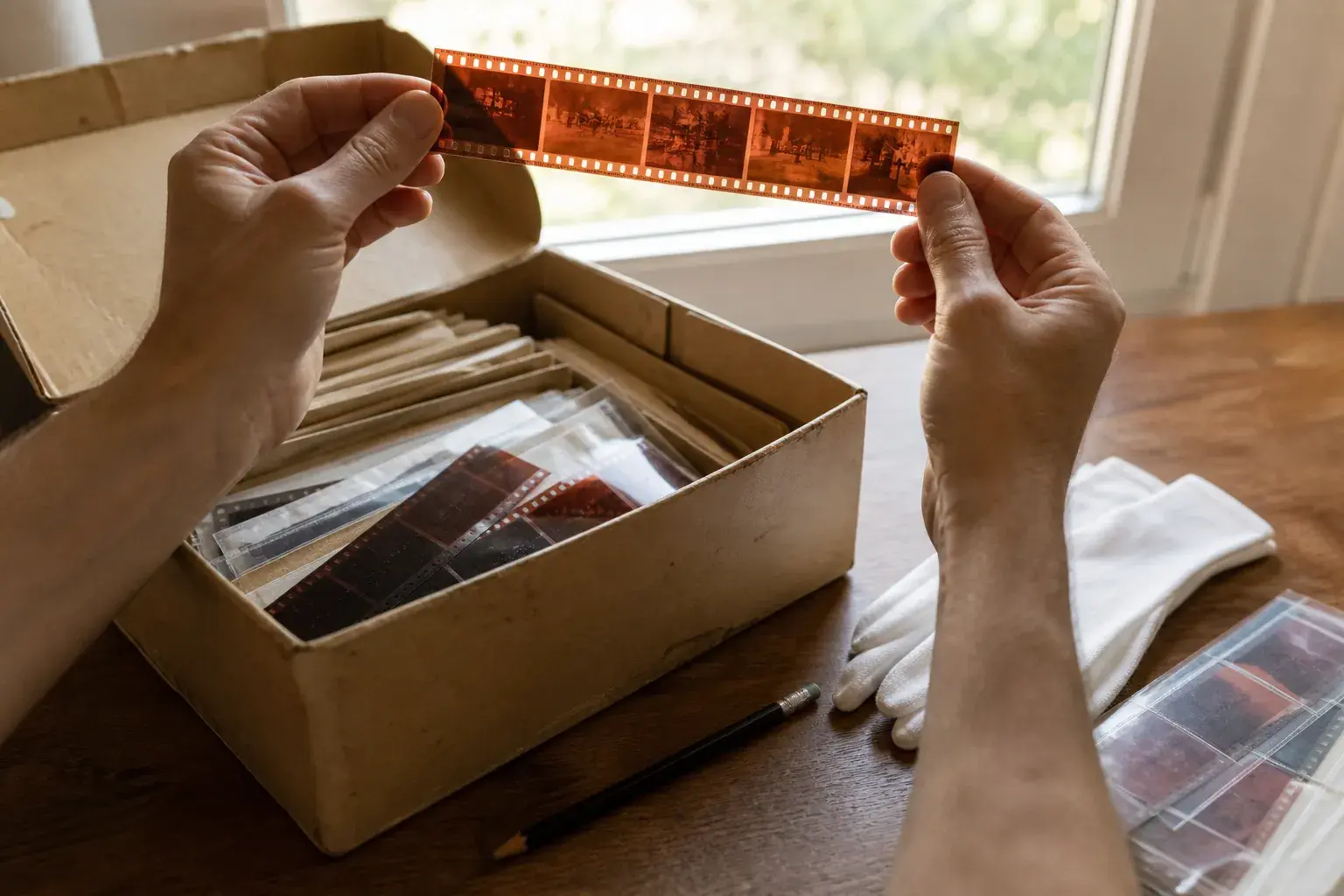
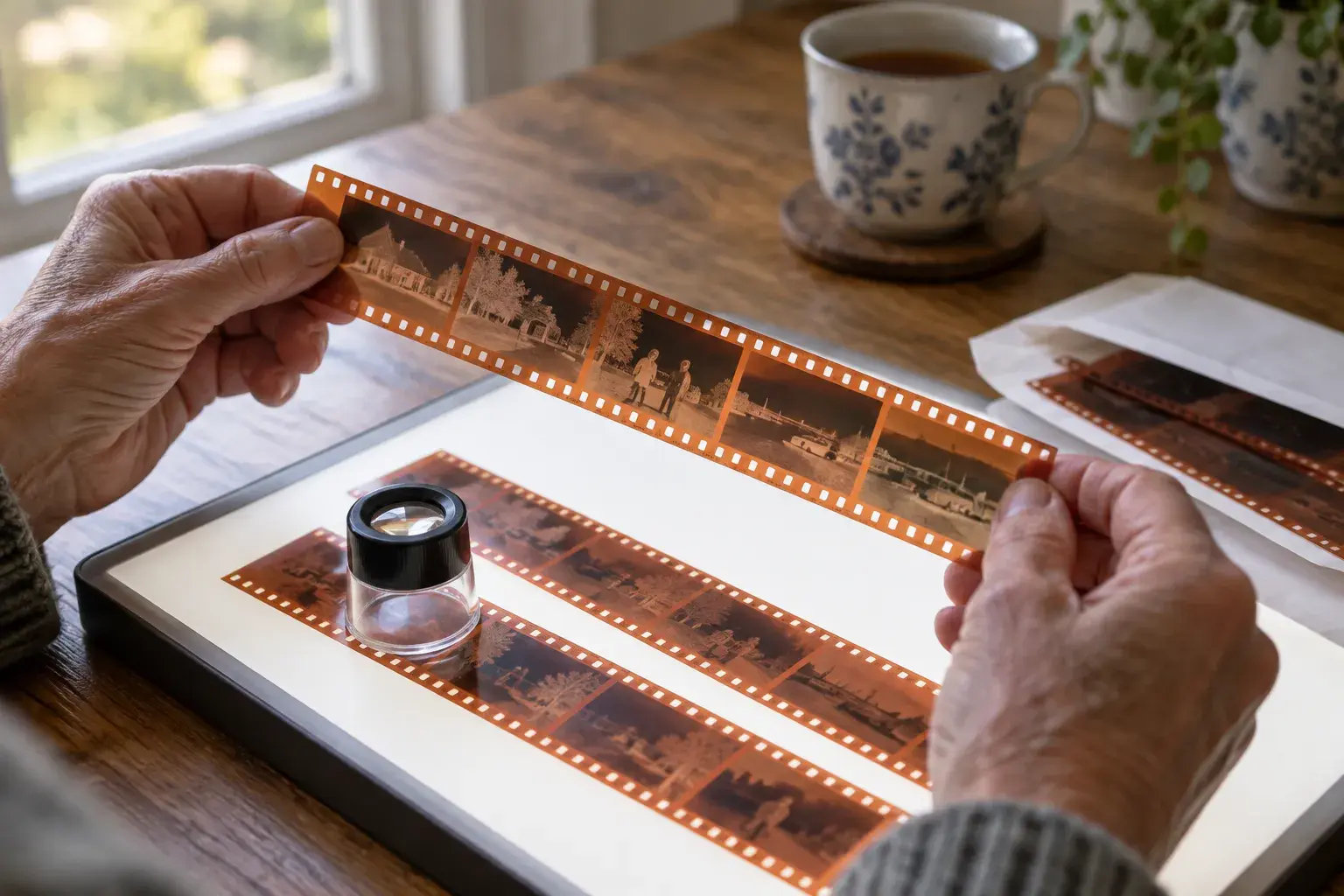
If the family still has the negatives or slides from those years, look there first. A print that spent 40 years in an album is often faded, yellowed or cut off at the edges, while the negative kept in the dark usually holds more detail and better color. Negatives are also where you find frames that were never printed at all. Our guide on what to do with old negatives explains how to sort a shoebox, and how to read negatives shows how to spot faces and scenes on a strip before you scan anything.
A quiet word of tact: some photos carry grief or old arguments, such as a relative who has died recently, a former spouse or a house that was lost. If you are not sure, ask a sibling or a cousin before you wrap it.
Get a copy good enough to print
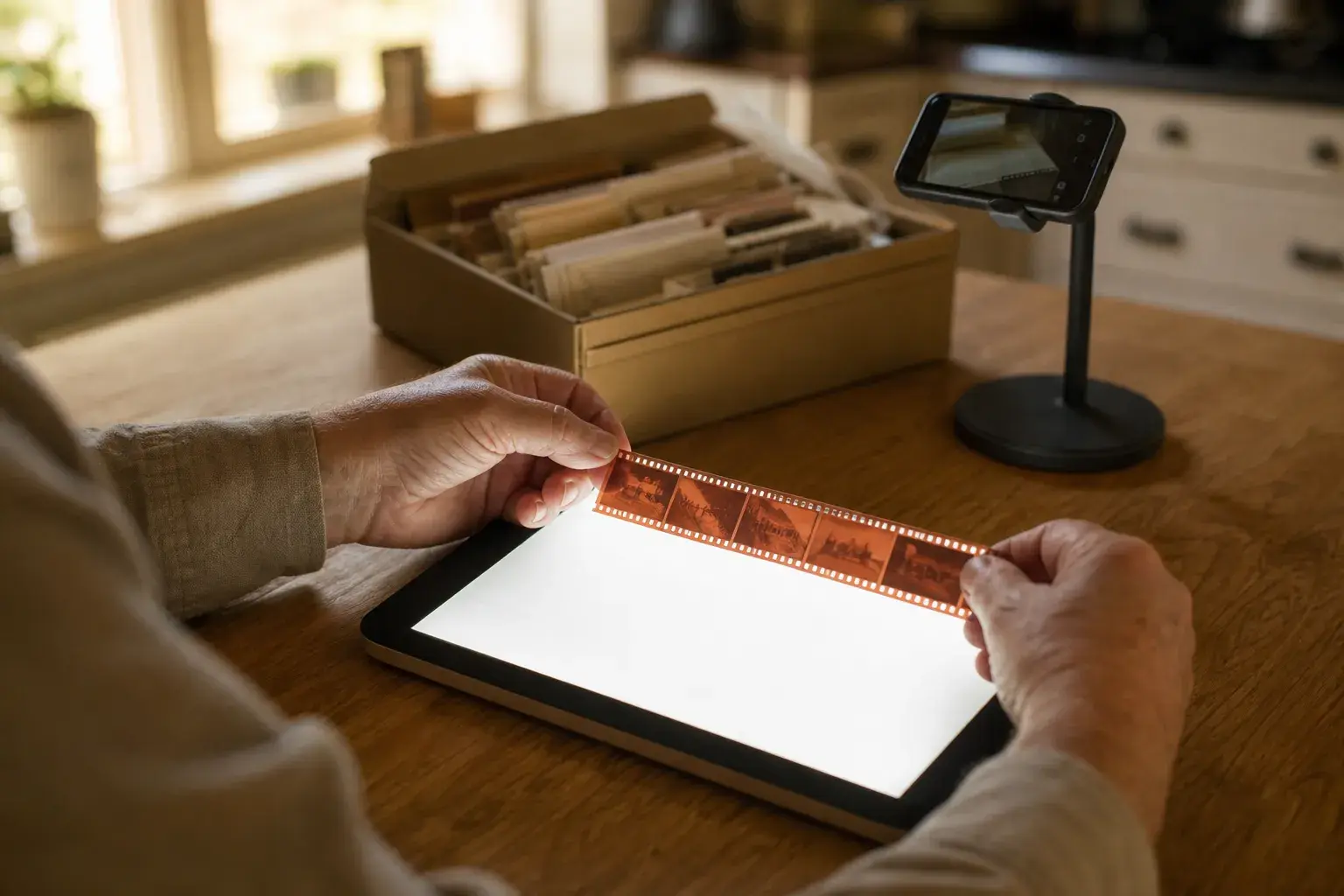
Every gift on this list starts with a good digital copy. If you have negatives or slides, the simplest way is to photograph them with your phone over an even, bright light, using an app that turns the negative into a positive. Our step-by-step guide to scanning negatives with your phone covers the light, holding the film flat and the settings; for framed slides, see how to digitize slides at home.
With Film Scanner, you choose the film profile (color or black and white negative, or a slide), the camera shows the converted picture while you aim, and the app crops the frame for you. Scanning is free.
How big can you print it?
Print shops usually ask for about 300 pixels per inch for a sharp print. That gives a simple rule of thumb:
| Print size | Pixels needed (approx.) | Good for |
|---|---|---|
| 4 x 6 in | 1,800 x 1,200 | Postcards, small frames, a photo book page |
| 5 x 7 in | 2,100 x 1,500 | Desk frames, cards |
| 8 x 10 in | 3,000 x 2,400 | A wall frame, a book cover |
| 11 x 14 in | 4,200 x 3,300 | A large framed print (needs a very clean scan) |
A modern phone camera captures about 4,000 x 3,000 pixels. When the film frame fills most of the picture, that is enough for a sharp 8 x 10. If you shot from too far away and the frame is small in the middle of the image, scan it again closer rather than stretching it later.
Fix it, but keep the original
Before you print, give the photo the care it deserves:
- Color first. Auto color and the basic adjustments (exposure, contrast, temperature) fix most faded or tinted scans in a minute.
- Restore only the special ones. For a scratched, torn or badly faded picture, the Premium AI tools in Film Scanner can restore the photo, colorize a black and white picture, or make a small scan sharper and bigger.
- Save both versions. Keep the plain scan next to the improved one. AI can smooth a face too much or guess details, and you will want the honest version later.
Nine gift ideas with old photos
Each idea lists who it suits, what you need and how long it really takes once the photo is scanned.
1. One restored print, framed
The simplest gift is often the strongest: one photo, carefully scanned, color corrected and framed. Pick a 5 x 7 or 8 x 10 frame with a mat, print the copy at a photo kiosk or an online print service, and write the year and the names on the back. Frame a print of the scan, not the original: the National Archives advises displaying copies and keeping originals in a box, because light fades photographs. Time: an evening, plus printing.
2. Then and now
Find an old photo of a place or a pose, then take the same photo today: the front steps of the family house, two sisters on the same bench, a father holding his grandchild where he once held his child. Print them side by side in a double frame or on facing pages. It works best with places that still exist and with people who enjoy the joke. Time: a day, mostly for the new photo.
3. A small photo book about one life or one decade
A whole family archive in one book is overwhelming. A slim book of 20 to 40 photos about one person ("Mom, 1958 to 1985") or one era ("the farm years") gets read again and again. Put photos in order, add one line under each with names, place and year, and leave the last page for the recipient to fill in. Online photo book services get busy in December, so order early. Time: a weekend.
4. A real postcard from the past
A postcard is a small gift that arrives like a surprise: a photo of the recipient as a child, mailed to their door with a few warm lines on the back. In Film Scanner you can turn any scan into a 4 x 6 postcard: adjust the crop, write your message, add the address and the app has it printed and mailed for you, anywhere in the world. The app checks whether the photo is sharp enough to print before you pay. International postcards have no tracking and can take up to 20 days, so plan ahead (see the timeline below). Time: ten minutes per card.
5. A calendar with the right dates
Make a calendar where each month shows a photo from that month in an old year: the July picnic, the December tree, a birthday photo on the birthday. Add family birthdays and anniversaries. It is a gift that gets looked at every day for a year. Time: an evening once the photos are scanned.
6. The whole box, scanned and shared
For the person who kept the family box for decades, the gift can be the box itself, finally digitized. Scan it, name the files with year and place, and give it back on a USB stick or as a shared online album, with the originals returned untouched. Add a short note on where the copies are stored. The Library of Congress recommends keeping at least two copies in different places, giving photos descriptive file names and tagging them with the names of the people in them. Time: a few evenings for a shoebox.
7. A slideshow for the family gathering
No shipping, no printing: put 30 to 60 scans in an album, play them as a slideshow on the TV after dinner and let the room do the rest. Put the photos in rough date order, keep each one on screen for six to eight seconds, and expect the slideshow to stop often while someone tells a story. Have a phone ready to record those stories. Time: an evening.
8. A portrait that moves
The Premium "Create short video" tool in Film Scanner turns a photo into a few seconds of gentle movement, which many families find moving for a portrait of a grandparent they miss. Choose a clear, front-facing face. Tell the recipient it is an AI animation made from the photo, and show it privately first: not everyone wants to see a late parent move. Time: a few minutes, plus rendering.
9. A photo with its story
Print one photo and pair it with the story behind it: a card, a letter, or a short recording of the person in the picture telling what happened that day. If they are still with you, the best gift may be the conversation itself: bring the photos and ask the questions in the next section. Time: an afternoon.
A timeline for holiday photo gifts
Work backward from the day you will give the gift. Printing services and mail get slower every week of December.
| When | What to do |
|---|---|
| 6 to 8 weeks before | Find the box, ask relatives what they have, sort and preview the negatives |
| 4 to 6 weeks before | Scan the photos you need; restore the special ones |
| 3 to 4 weeks before | Order photo books, calendars and large prints |
| About 4 weeks before | Send postcards to other countries (up to 20 days, no tracking) |
| 1 to 2 weeks before | Send domestic postcards and cards |
| The last days | Gifts that need no shipping: a slideshow, a shared album, an animated portrait, a print from a local kiosk |
For Christmas 2026 in the United States, USPS recommends sending First-Class Mail by December 17. For international postcards from the app, aim for the end of November.
Common mistakes with photo gifts (and how to avoid them)
- The print is soft or pixelated. The scan is too small for the print size. Choose a smaller size, scan again closer to the film, or use upscaling for the one photo that matters.
- Colors look orange, blue or washed out. The wrong film profile was used, or the color was not corrected. Check that color negatives were scanned as color negatives, then try auto color.
- Faces are cut off on the postcard or in the frame. Printing trims the edges. In the postcard preview, keep faces inside the dotted line; for frames, leave some space around heads.
- The restoration changed someone's face. Keep the plain scan, use a lighter touch, and if in doubt give the honest version. A real face with a scratch is better than a smooth stranger.
- You gave away the only original. Give copies. Keep the negatives and the first scans safe, or return them to the person who owns them.
- Too many photos. One photo that someone stares at beats a hundred they scroll past. Choose fewer and add names and dates.
Make it more than an object: names, dates and stories
A photo without names becomes a mystery within a generation. Whatever you give, add who, where and when: on the back of a print, under each page of a book, in the file name of a scan.
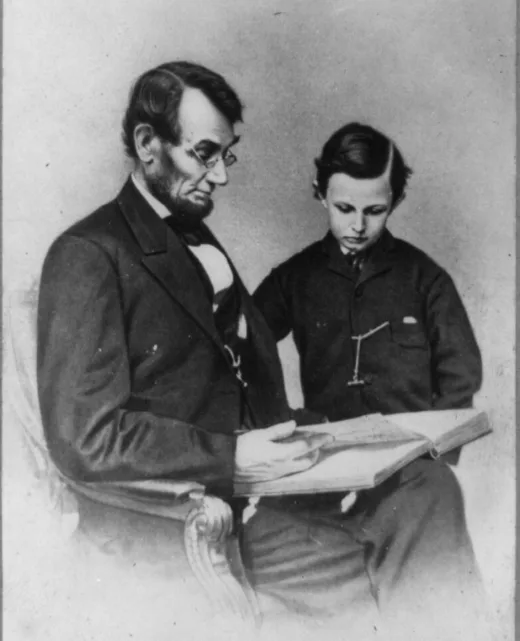
The best moment to collect stories is when the gift is opened. A few questions that work well:
- Who took this picture, and with what camera?
- Who is everyone in it, and who is missing?
- What happened just before and just after?
- Where was this, and does the place still exist?
- What do you remember about that day that the photo does not show?
Ask open questions, listen more than you talk, and record it on your phone (with permission). Those recordings may end up being the real gift.
Frequently asked questions
What can I make with old family photos?
Framed prints, photo books, calendars, postcards, a slideshow for a family gathering, a then-and-now pair, or a shared digital album of the whole collection. Start by scanning the photos, from the negatives if you have them, so you can print any of these without risking the originals.
Can you make new prints from old negatives?
Yes. Once a negative is scanned, the file can be printed at any photo kiosk or online print service, often with better color and more of the frame than the original print. Some labs still print directly from negatives too.
What is a good photo gift for grandparents who have everything?
A photo they have not seen in years: a frame from a negative that was never printed, a restored picture of their own parents, or a small book about their early years. Bring it in person and ask them to tell the story behind it.
How do I make old photos look better before printing?
Scan them as large and as sharp as you can, then fix exposure, contrast and color. For faded, scratched or small photos, AI restoration and upscaling can help a lot. Keep the original scan in case the restored version looks too smooth or invented.
How long does it take to digitize photos for a gift?
With a phone and a simple setup, a strip of six negatives takes a few minutes, and a shoebox can be done over a weekend. Leave extra weeks for printing, photo books and international mail before the holidays.